
Real estate returns are largely driven by capital flows, especially debt. These cycles vacillate predictably through fear and greed, taking little time in the middle area of “fair value”. In the modern world of institutional real estate, there have been a few notable periods of “fear” and capital retreat. In hindsight, there were the best periods to acquire over the last 40 years. Could we have known beforehand?
S&L Crisis. With S&Ls failing in the late 1980s, their real estate holdings became available at discounted prices. Opportunistic investors could snap up valuable properties and benefit from long-term appreciation. The crisis reshaped the banking and regulatory environment, creating new investment opportunities in areas like commercial mortgage-backed securities.
Dot-com Bust. The collapse of many tech companies left behind a glut of office space. Investors could acquire these properties at low costs and repurpose them for more resilient sectors, generating significant returns.
Great Financial Crisis. Similar to the S&L crisis, the financial crisis left a trail of distressed real estate debt. Investors who purchased this debt at significant discounts could benefit from property restructuring and eventual recovery.
In each of these periods lenders tightened standards dramatically, and forward returns were strong.
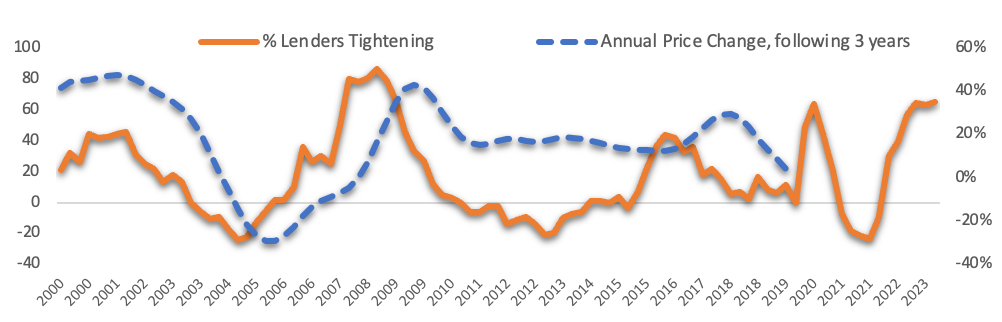
This datapoint offers real-time guidance on the cycle. Many of the major successful players in the real estate world today can trace their origination back to one of these three periods, and future giants could very well be borne in the coming few years.

 ContrariLand
Leave a comment